Already testing for years? Why ISTQB CTFL v4 is still worth it, and how to certify
Already write tests for a living? Why ISTQB Certified Tester Foundation Level v4 is still worth taking and how to prepare in less than 15 hours.
In more than 6 years I’ve written and automated thousands of tests. So why would I take a fondation level exam now…?
To be fair, mostly because I was given the chance to. My company paid for the ISTQB® Certified Tester Foundation Level exam (CTFL v4), so I took the opportunity. I also knew it would not be too difficult to pass it.
And now that it’s behind me, I’m glad I did. I want to share why you should also take it if you get the chance, even as an experienced tester, developer, test automation engineer or testing manager.
Let’s go through how I prepared and some resources I used. And if you stay until the end you’ll even get a testing-fundamentals agent plugin that you can use to audit your codebase, applying the certification concepts.
CTFL v4 at a glance
Format 40 multiple-choice questions, 1 point each Pass mark 26/40 (65%) Duration 60 min (+25% if not in your native language) Prerequisites None Realistic prep with field experience ~15 hours (5 days × 3 h worked for me) Where Remote (proctored from home) or test centre
What CTFL v4 brings you when you already have experience
What the CTFL v4 syllabus and exam cover
The syllabus is going through 6 chapters:
- Fundamentals of testing: definitions, goals of testing, test activities, roles, skills needed.
- Testing through the Software Development Lifecycle (SDLC): the different SDLC types and how testing fits in each, good practices when testing, DevOps and testing, test levels and types.
- Static Testing: the value of it, the difference with dynamic testing, the review process.
- Test Analysis and Design: test techniques overview, white-box, black-box, experience-based testing, coverage, collaboration-based testing approaches.
- Managing the Test activities: test planning, test pyramid, quadrants, risk management, test monitoring, control and completion, configuration management, defects management
- Test tools: tools supporting testing, benefits and risks of test automation
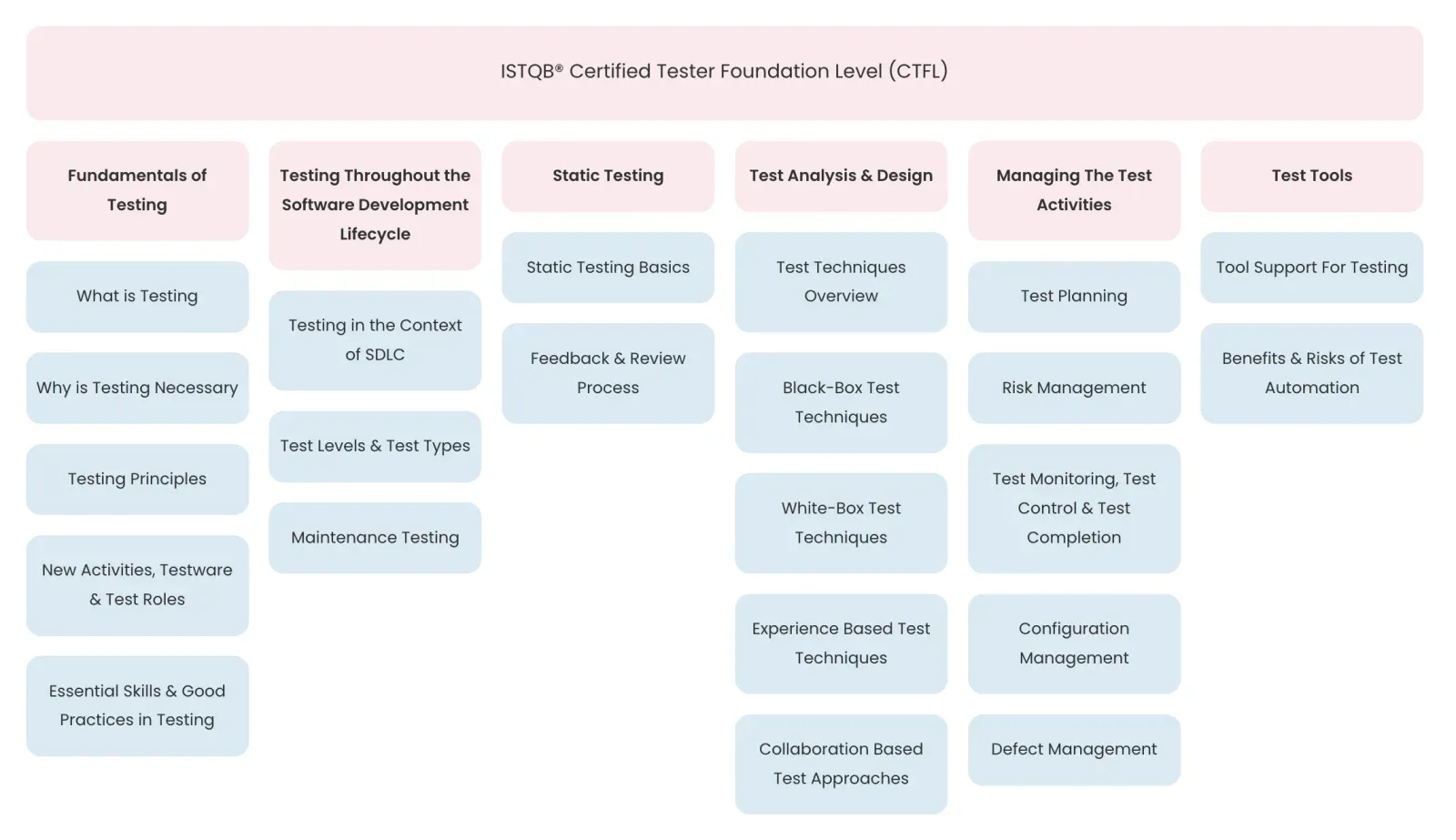 Source: ISTQB
A shared vocabulary
But you think you know all of these concepts. You’ve used them, explicitly or implicitly over the years. So what would the certification give you?
First, a shared vocabulary. Teams, QA, vendors and clients mean different things by “integration test”, “regression” and “coverage”. The syllabus and the ISTQB glossary give one reference. That’s fewer arguments about semantics and smoother collaboration overall.
Names and methods for what you did by instinct
Equivalence partitioning, boundary value analysis, decision tables… you already approximate them. Implementing them consciously systematically finds the test cases and defects you missed before.
A blind spots remover
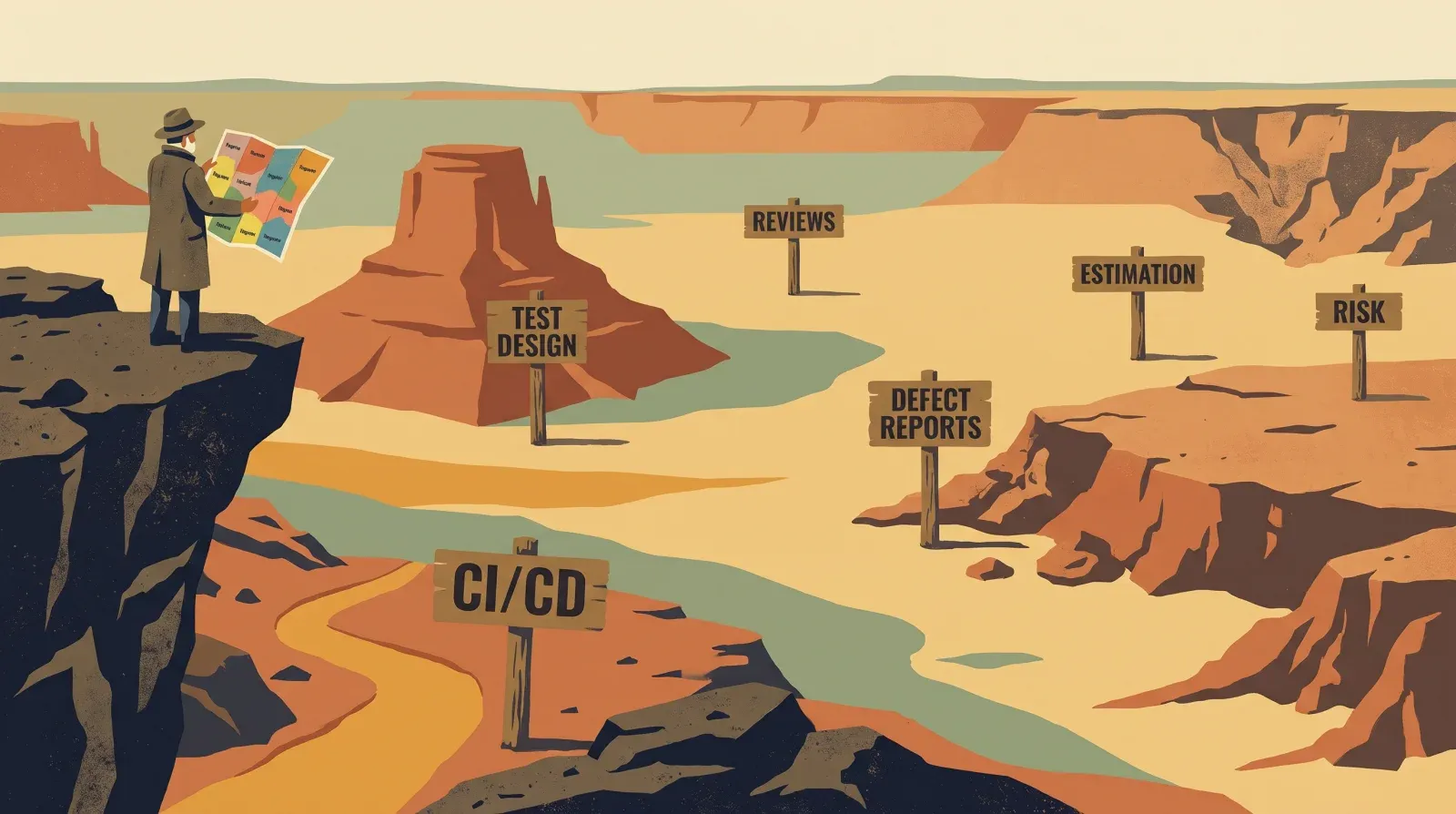
As a SDET (heavily focusing on CI/CD work), I was biased and had many blind spots, that I fixed going through the certification. In a team focusing on quality, or dare I say in a quality-first organization, CI and automation are but tiny pieces of the big puzzle. How to (properly) conduct reviews, how to (properly) report defects, how to (properly) estimate the testing effort… are all equally important. Being aware of all these opens up your mind.
It shows you care about the bigger picture and the actual product or service under development, not only your own, limited part of the quality environment.
Credentials
Which brings me to my last point: the learnings from this certification open you more doors, be it in your current position or when looking for your next one. It gives you insight into adjacent roles, including management in testing.
It’s also an entry ticket to more advanced and specialist modules (Test Automation strategy, AI testing…).
When ISTQB is not worth it
This should give you a good overview of what the certification can help you with. And where it can’t.
If you need hands-on tool skills, the certification won’t give you those. I would prefer experience over certification badges a hundred times, and if your company is not willing to pay for it, I would carefully think about going for it out of my own pocket.
How I prepared for ISTQB CTFL v4
The trap: your experience working against you
Experienced testers will come with a heavy luggage of habits, knowledge, feelings, and this is what you need to unlearn in order to certify.
Moreover, depending on your background and previous roles, you might need to “think backwards and/or slower”, which for me was a little bit counter-intuitive. For example test cases as defined in the syllabus can be (and primarily are) exercised by hand (“operator clicks the login button”). Coming from a CI/CD engineer perspective, this meant I needed to stop only seeing test cases as code exercised on a remote cloud worker with automatic scripts and frameworks.
The difficulty: unlearning your habits
The exam rewards the texbook answer, not your practice. So you really need to put it aside and use the syllabus definitions and mental model.
Where your experience helps is to grasp many practical concepts much faster, such as the pyramid model, test-driven development or the devops culture.
Why the syllabus alone isn’t enough
So you decided you wanted to certify, but how do you do that now?
The official syllabus is a good start, but I’m honestly not sure it would get you the minimum 65% to pass, or maybe with extra luck.
- It lacks the precise method or computation for some exam questions (for example the minimum number of test cases for “each choice” coverage).
- It’s text only: testing quadrants or state transitions click faster with a drawing.
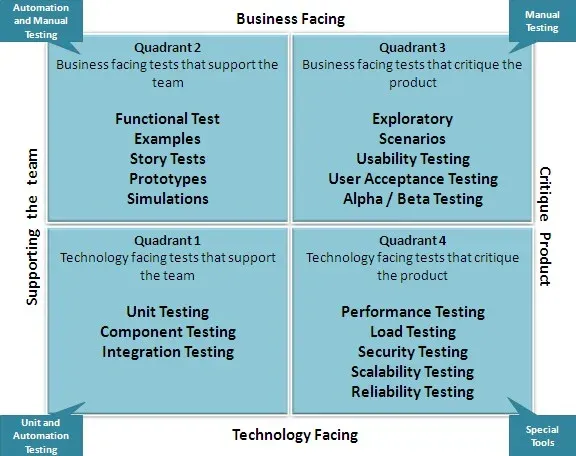 Source: TryQA
The best book and mock exams for CTFL v4
So I recommend using additional resources for a better preparation. Besides, what matters beyond the certification is properly understanding the underlying concepts, so some extra reading helps.
- Book: I used “Software Testing: An ISTQB-BCS Certified Tester Foundation Level guide (CTFL v4.0) - Fifth Edition” (affiliate link) (that is a long title), written by Geoff Thompson, Peter Morgan, Angelina Samaroo, John Kurowski, Peter Williams, Marie Salmon, and Paul Weymouth (that is a long list of writers).
- Mock exams: the book contains one, the ISTQB CTFL v4 page has official sample exams, and iSQI has some for free.
And here are some other resources I haven’t tried. I wouldn’t over prepare though, especially if you’re already experienced. One extra book was more than enough for me.
In summary:
- the syllabus = what’s examinable
- a book = how to answer
- mock exams = the exam’s wording
My 15-hour CTFL v4 study plan
The plan that got me a 90% score: just read take a syllabus chapter, read it, then read the corresponding book chapter. That’s it - no secret formula.
Focus on the chapters getting the most points (chapters 4 and 5) - not so much on chapter 6 about tools. Learn the formulas (how to compute coverage, how to compute three-point estimation…). Or if you don’t, get ready to rely on luck for a couple of questions.
Finally, get familiar with the exam logistics and wording. It will avoid a lot of stress on the exam day. The book I linked has a dedicated chapter for that, but you can probably find the info online too (or using the free mock exams).
My testing fundamentals plugin for Claude and Codex
You can find my Claude and Codex testing-fundamentals skill here.
It gives Claude the knowledge of a Foundation Level software tester, based on the ISTQB® Certified Tester Foundation Level (CTFL) v4.0 syllabus. It works in four modes:
- Audit: examines a repo, runs its tests and coverage, analyses product risk, and writes docs/test-audit-YYYY-MM-DD.md. Findings are ordered by risk, each with evidence and a syllabus section reference.
- Test design: derives test cases for a function or user story with equivalence partitioning, boundary value analysis, decision tables, state transitions, and ATDD, with coverage figures.
- Change review: reviews a diff or PR with impact analysis, confirmation testing, and regression testing.
- Test management artifacts: test plans, risk registers, estimates, test reports, and defect reports.
It reads code and runs tools, but it does not change source code, tests, or configuration. It uses only the concepts of the CTFL v4.0 syllabus.
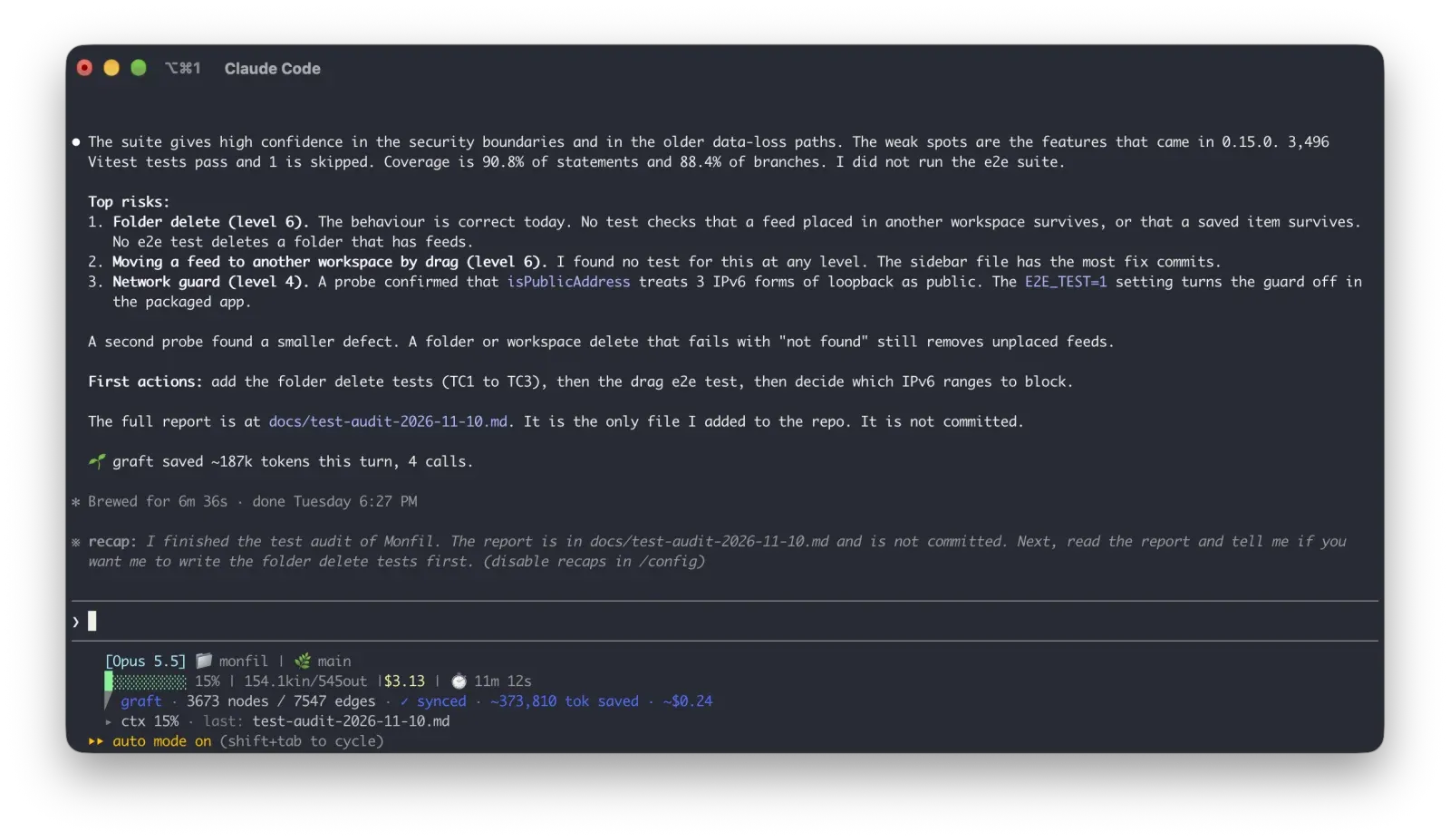
Use it to get insights on a codebase you’re not familiar with and to get your first action items from a testing perspective.
Should you (or your team) get ISTQB certified?
It can make a lot of sense even if you are experienced: when a whole team shares a common industry vocabulary, the outcome is clearer test strategies, better reviews, and estimates one can actually defend.
What the certificate won’t fix is slow CI, flaky tests, missing test selection. That is practical, engineering work and this fondation syllabus only names the problems.
Last updated: 2026-11-03. Based on the ISTQB® CTFL syllabus v4.0.
Disclosure: the link to the BCS book is an Amazon affiliate link. As an Amazon Associate I earn from qualifying purchases. It costs you nothing extra, and I only recommend resources I actually used.
ISTQB® is a registered trademark of the International Software Testing Qualifications Board. This article describes my own experience and isn’t endorsed by ISTQB.
Related reading